
Building capacity and unleashing support: How Fortis Trust’s outreach service is transforming SEND support and provision locally
This article was originally written by Forum Strategy.
In a landscape where Special Educational Needs and Disabilities (SEND) are becoming ever more prevalent and complex, trust leaders are uniquely positioned to identify and share expertise, enabling local and system-wide improvement.
It is clear there is a real impetus in some trusts to develop strategies that support not only their own schools, but the wider local community – ensuring every child has the opportunity to thrive.
In this case study, we talk to Marie Sweetlove-Smyth, CEO, and Lorraine Lewin, Head of Outreach, at Fortis Trust about the outreach service they’ve developed from scratch, to support their local community. We find out more about their deep-rooted commitment to collaborative support, how they’ve built a comprehensive offer from the ground up to meet profound and growing local needs, and the advice they would give to other trust leaders considering a similar path.
“It’s not purely supporting just SEN; it’s enhancing quality-first teaching and therefore impacting all children. We are raising the quality of education and teaching across the region… If we can get in early, we can make a difference.”
Can you tell us about Fortis Trust’s outreach service and the ethos that underpins it?
Fortis is a small trust based in Medway (Kent) currently comprising a specialist all-through academy and a post-16 institution supporting young people into employment. In the near future, we will be opening a new free school in Whitstable to add to our group of schools.
Perhaps the most distinct element to our trust is our outreach service, which provides SEN support to young people, families, and schools across Medway and Kent. The service began over a decade ago as an offer of support from our specialist provision on an ad-hoc and case by case basis. However, we saw the immense need in the region and felt a moral imperative to do more. The service has been built on the belief that it is simply “the right thing to do”, aligning directly with our Trust’s core values of fostering collaborative partnerships and being an outward-facing organisation that makes a positive difference to the whole community. Our ethos is not just about intervention for a few but about upskilling the entire system. We aim to empower mainstream schools, provide inclusive training that benefits all pupils, and ensure more children can be successfully supported in their local school.
What are some of the specific local challenges your service aims to address?
The context in Kent and Medway is one of significant and growing need. Regionally, we have one of the highest percentages of SEN in the country, and the needs are becoming more complex. This is compounded by high levels of deprivation and pockets of low parental aspiration in some areas. We can also see a number of factors that create a perfect storm of demand. A selective grammar school system can concentrate students with the most significant needs in mainstream secondary schools. We have mobile populations, including families relocating from London and an influx of asylum seekers, which can create challenges for school place planning and support services. Culturally, we also see an increase in needs that may not be recognised within a family’s culture, requiring sensitive and skilled support. Each year brings a new trend; recently, we have seen a huge escalation in young people presenting with traits of ADHD, which when unsupported can have a significant impact on behaviour and suspensions.

What are some of the specific aspects of your outreach services and how are the services funded?
We have grown our outreach service from scratch and our offer has grown significantly over 10 years to become a comprehensive, multi-faceted service. We have a three-pronged approach:
Schools & Professionals: We provide extensive support for school staff, including in-class observations with actionable recommendations, bespoke and CPD-accredited training, and coaching for teachers and TAs. We run termly SENCO network meetings, which became even more successful when we moved them online during the pandemic, increasing accessibility. A key part of our work is conducting teaching, learning, and environmental audits to help schools adapt their practice and provision to be more inclusive. This isn’t about buying expensive resources, but making simple, effective adaptations to make the classroom accessible to all.
Students: We offer direct one-to-one and group support for students from Reception through to Key Stage 5. This work helps them develop coping strategies, manage their own behaviours, and better understand their own SEN conditions, particularly for those with a late diagnosis. The goal is to build their confidence and resilience, enabling them to access education.
Parents & Families: Supporting parents is crucial. We run parent coffee mornings, deliver the National Autistic Society ‘Teen Life’ programme, and we are developing our own bespoke sessions tailored to the Medway context. For many families who have had negative experiences with education, we act as a vital buffer, helping to bridge the gap between home and school. Because some of our team are also parents of children with SEN, we have a genuine understanding of the journey, which helps build trust.
The outreach service is primarily funded through being commissioned by the local authority, specifically Medway, which allows the support to be offered for free to schools within the area. Securing this regular commissioning is a significant and ongoing challenge, but it is a primary goal for the trust. In addition to this, schools outside the commissioned area, such as those in Kent, can also individually purchase support packages, and the team also receives commissions to address specific, urgent needs.
“This isn’t about buying expensive resources, but making simple, effective adaptations to make the classroom accessible to all.”
What are some of the key benefits of the outreach work for children and young people and the community?
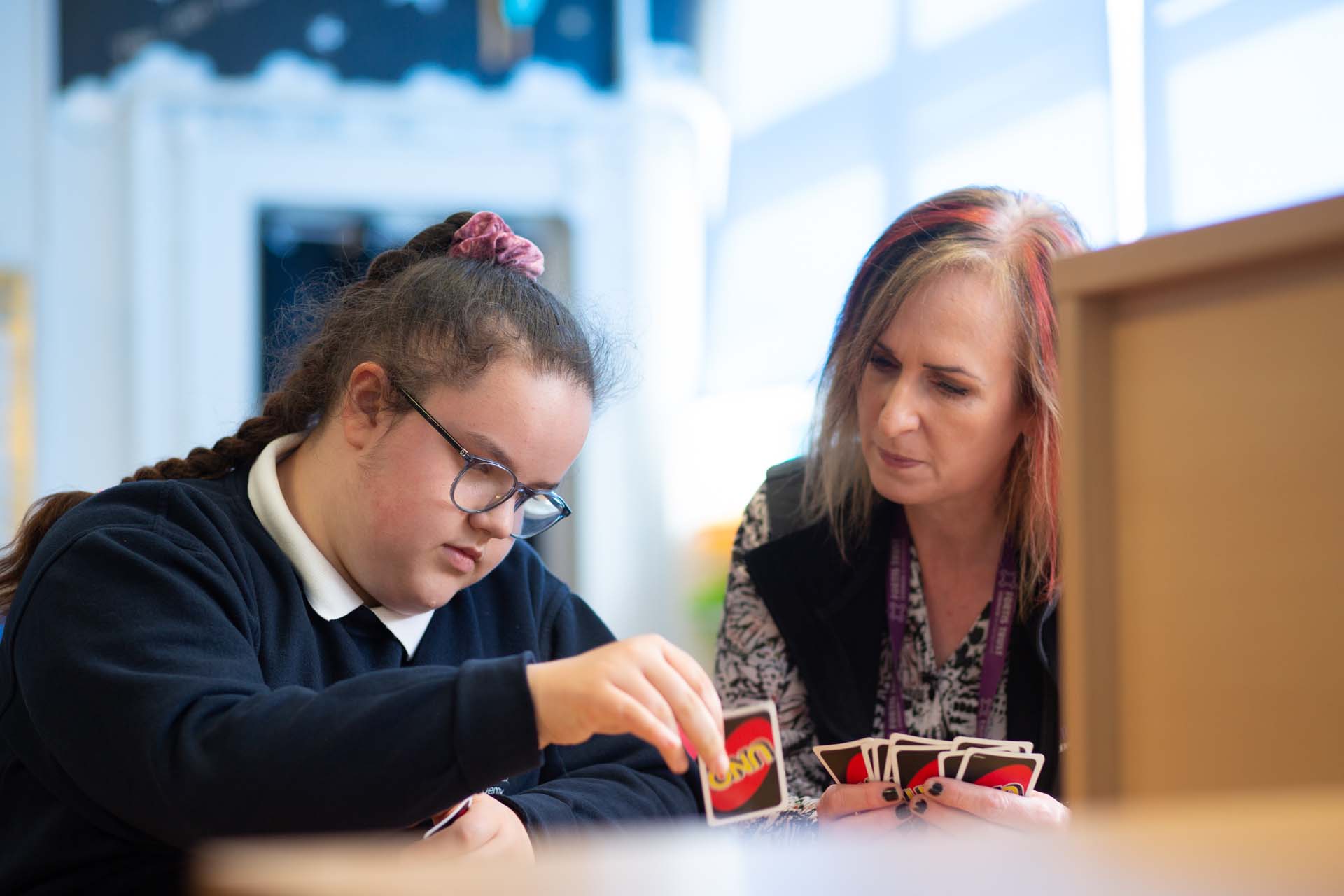
Enhanced learning and life skills for young people: The outreach work directly enables young people to access education more effectively. By providing bespoke support and coping strategies, it helps them build confidence, develop social skills, and ultimately gain qualifications, leading to a more fulfilled life.
Increased inclusion and reduced exclusions: Through early and targeted intervention, the service is instrumental in keeping more children within mainstream settings. It actively works to reduce permanent exclusions and supports students through difficult transitions, ensuring they remain engaged in their education.
Empowered and connected families: The services we provide offer extensive support for parents through training sessions and workshops, empowering them with the knowledge to support their children. Crucially, it fosters strong community networks, reducing feelings of isolation and bridging the gap between home and school.
An upskilled and collaborative professional community: The impact extends across the local workforce by upskilling not only teachers but also early years teams, local authority officers, and other care professionals. This raises the quality of support across the entire region and fosters a more collaborative professional environment.
A more inclusive community with better opportunities: The trust’s work aims to create lasting, systemic change. By training local businesses to be more inclusive and improving employment pathways, the work provides young people with tangible opportunities to get jobs, contributing to a more skilled and economically vibrant community.
How important is the outreach work to the overall vision and values of the trust? And how important has the Board and CEO role been in enabling the work to happen?
The outreach work is deeply integrated with the trust’s core vision and values, receiving strong and active support from the Board. The Board provides strategic oversight, regularly reviewing the team’s progress to ensure the service is both impactful and cost-effective. They are exceptionally proud of the work, recognising its significant positive effect on the trust’s reputation and on the local community.
Our outreach work is a direct expression of the trust’s fundamental values, particularly its commitment to innovation, collaborative partnerships, and valuing identity and diversity. Ultimately, the services we provide embody the trust’s “framework for excellence” by ensuring that every individual in the community is supported to be their very best, making this work a central and vital component of the trust’s overall mission.
My role as CEO is focused on providing strategic oversight for the trust’s outreach initiatives. This involves leading efforts to secure contracts, collaborating with our marketing team to ensure our services are promoted effectively, and actively participating in various networks. Through this engagement, I can raise awareness, share information, and encourage leaders across education to take advantage of the opportunities our outreach services provide.
“Our outreach work is a direct expression of the trust’s fundamental values, particularly its commitment to innovation, collaborative partnerships, and valuing identity and diversity.”
How has having a dedicated Head of Outreach for the trust role enabled the success of the work?
Lorraine’s role as Head of Outreach is of central importance to the success of the trust’s outreach work. She not only leads the team but also acts as the crucial hub for all incoming referrals, personally assessing each case to strategically deploy the team member best suited to support a particular student, staff member, or school. A key aspect of her leadership involves extensive networking and building collaborative partnerships with a wide range of services and stakeholders. Lorraine’s role adds huge value because it enables the team’s practical and bespoke approach; they can focus on contextualising support for each school by implementing simple, accessible, and cost-effective adaptations, ensuring the outreach is both impactful and sustainable for all.
What have been some of the biggest challenges in developing the service, and how have you overcome them?
The single biggest challenge is, and always has been, securing funding. Relying on commissioning from the local authority creates uncertainty. We’ve never had more than a two-year funding agreement, which makes long-term planning difficult. The second challenge is capacity. The level of need is so great that you can never have enough people on the team; you are always aware that with one more person, you could do even more. We have also faced a challenge around perception. The service was originally named after one of our specialist schools, which created the misconception that a referral was a pathway to that provision. We changed the name to ensure clarity. Overcoming these challenges has been about effective communication, being realistic about what we can achieve, building a strong reputation for quality, and demonstrating our impact clearly.

How do you measure the impact of such a wide-ranging service?
We use a mix of quantitative and qualitative measures. For those who commission our services we report on KPIs such as the number of students supported and number of CPD sessions delivered. We also gather extensive feedback through focus groups and surveys with students, staff, and parents. At an individual level, we provide schools with detailed visit notes and conduct follow-up checks to track progress, which also provides clear evidence for any future EHCP applications. On a macro level, we analyse referral data. For example, if we provide a school with intensive training and support for their reception cohort one year, we can measure our impact by seeing a reduction in referrals for that same cohort as they move into Year 1. Ultimately, the biggest impacts are seeing more children succeeding in mainstream, a reduction in exclusions, and parents who feel less isolated and more confident to support their child.
What key lessons have you learned that could help other trust leaders looking to develop their own outreach services?
The most important lesson is that this work must be underpinned and driven by a central vision and a dedicated team. It cannot be an isolated, standalone project. Our top tips would be:
- Stay driven and focused:Have a clear moral purpose for what you are trying to achieve. Start small and with a specific focus – perhaps one area of SEN or one Key Stage – and build from there.
- Develop a dedicated team:The work is most effective when you have a highly skilled, dedicated team whose sole focus is outreach, rather than it being an add-on to other roles and individuals being pulled in different directions.
- Develop effective collaborative partnerships:This is core. Work with schools, the local authority, parent groups and wider stakeholders (such as local businesses). Start by surveying or running focus groups with these stakeholders to find out what they really need.
- Consider capacity:Be realistic about what it is you can deliver and price any purchasable packages accordingly to cover the capacity investment, while keeping them as affordable as possible for schools.
- Celebrate success:Market your work and continuously showcase the positive impact it has on many different parts of the community. This helps with continued buy-in and securing future support for the work.
”Ultimately, the biggest impacts are seeing more children succeeding in mainstream, a reduction in exclusions, and parents who feel less isolated and more confident to support their child.”
To find out more about this work, please get in touch with Marie Sweetlove-Smyth at marie.sweetlove@fortistrust.co.uk.
Find out more about our Outreach Service by visiting this link: https://outreach.fortistrust.co.uk/outreach-services/
Further Information
You can find out more about Forum Strategy on their website: https://forumstrategy.org or read the original article here: https://forumstrategy.org/building-capacity-unleashing-support-how-fortis-trusts-outreach-service-is-transforming-send-support-and-provision-locally/